What Does a Recovery Map Actually Look Like?
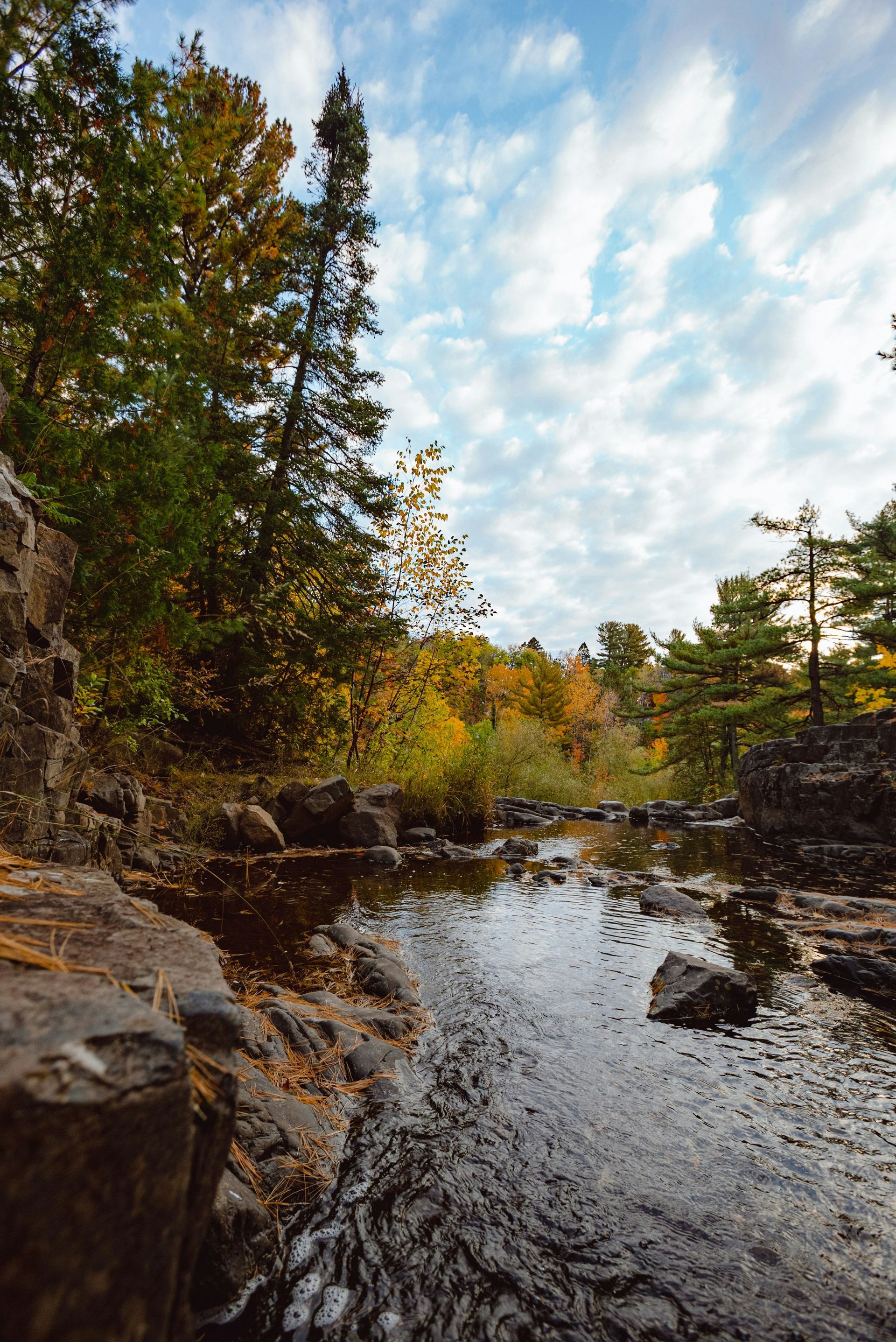
Before I became a physician, I spent years as a whitewater and mountain guide.
One thing I learned early: a guide's job is not to hand you a map and walk away.
A guide reads terrain with you.
They look at the same river you're looking at and see things you don't yet know how to see.
Where the current is moving beneath the surface.
Where the rocks are hidden.
Where the channel looks easy but isn't.
Where it looks difficult but actually runs clean.
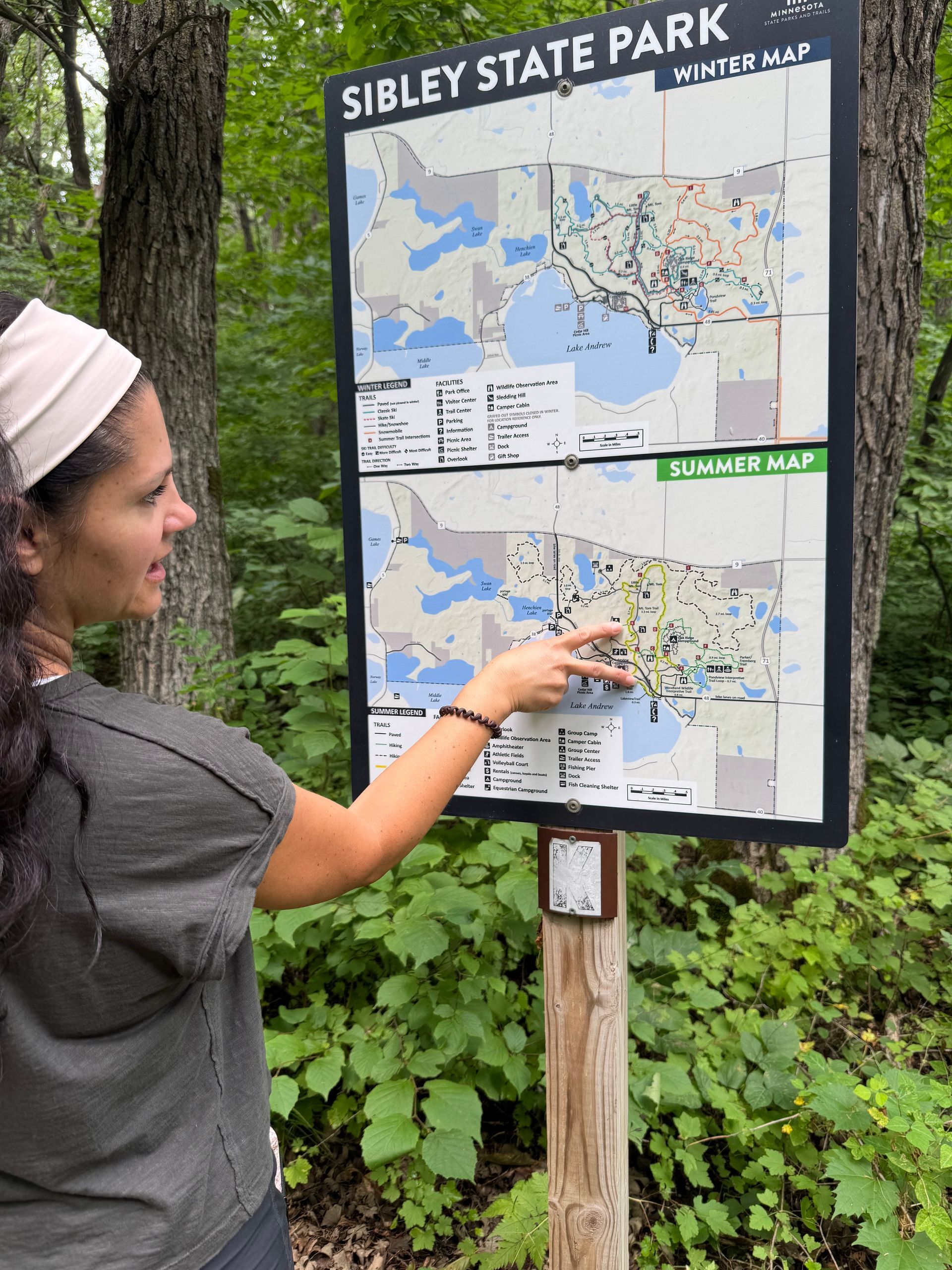
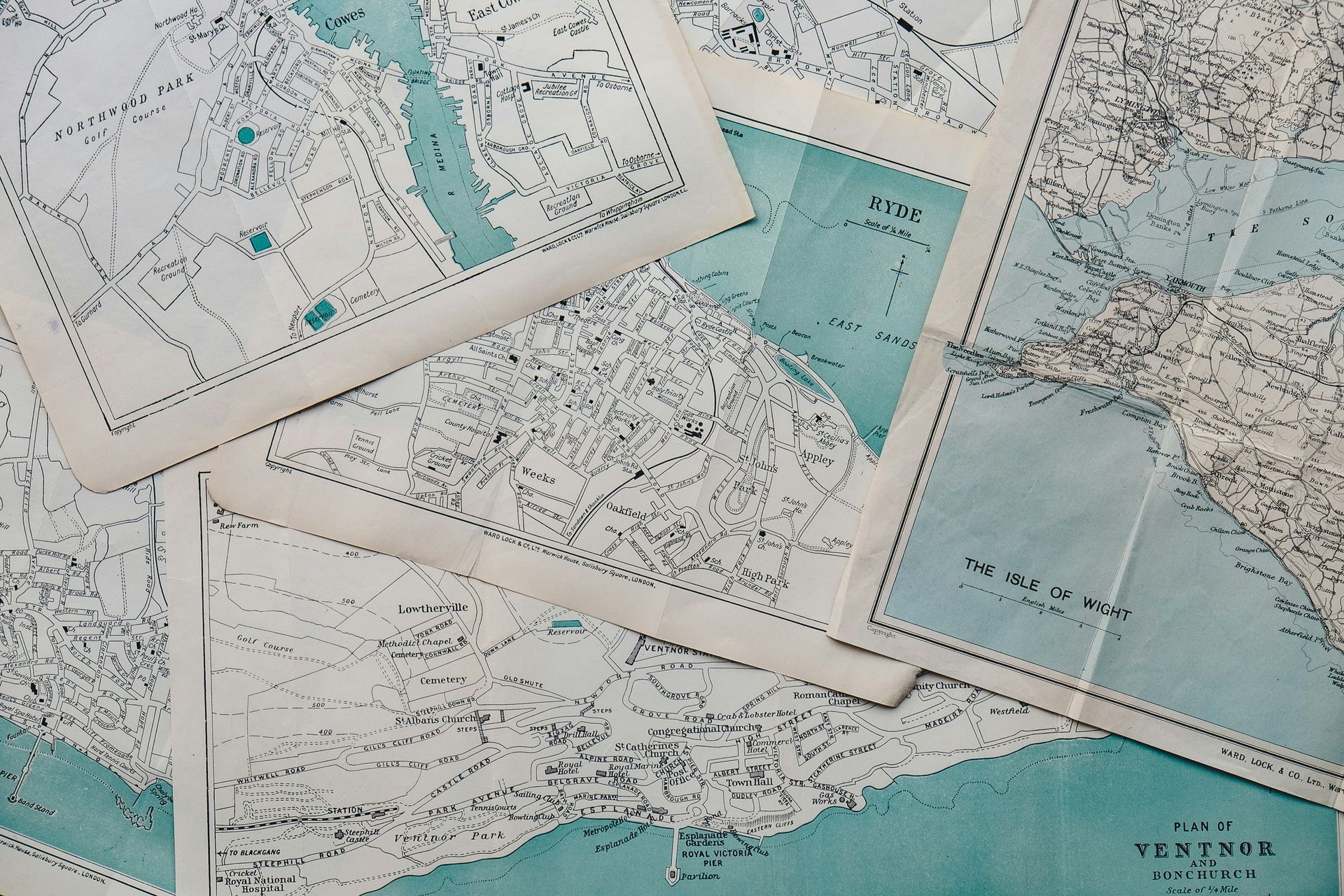
The map isn't a piece of paper.
The map is a living understanding of the terrain — updated in real time as conditions change, as the water level rises or drops, as you move deeper into the watershed.
People with chronic Lyme often arrive having collected enormous amounts of information about their illness.
Lab results. Research papers. Practitioner notes. Treatment histories spanning years.
What they often lack is not more information.
It is a way to read what the information means — together, as a pattern, in the context of their specific biology.
That is what a recovery map is.
Not a document.
A shared understanding of the terrain you are navigating.
What a Map Is Not
Before I describe what a recovery map looks like, it is worth being clear about what it is not.
It is not a protocol.
A protocol tells you what to do.
A map tells you where you are, what surrounds you, and what conditions need to change before the next step makes sense.
It is not a checklist.
Checklists assume the items are independent — complete this one, move to the next.
The domains of a recovery map are not independent.
They interact. They amplify each other. They create conditions that either support or undermine everything else.
It is not another treatment plan.
Treatment plans answer the question: what should we try next?
A recovery map answers a different question: what does this person's biology need in order to become capable of responding to treatment?
That distinction is not semantic.
In thirty years of caring for people with complex chronic illness, it is the single most important shift I have made in how I think about recovery.
Treatment plans assume the body is a passive recipient of intervention.
A recovery map assumes the body is an active participant in healing — one that can only participate fully when the conditions for participation are present.
The Five Territories
A recovery map for someone with chronic Lyme covers five interconnected territories.
None of them operates in isolation.
Each one influences the others. And all together they contain more than 50 variables.
This results in over a billion possible positions on the map. And each time we remap you, those variables will have changed, placing you in a new location.
Understanding all five — and how they interact in your specific case — is what makes the difference between treatment that lands and treatment that doesn't.
You see, your diagnosis tells you how you are the same as others with your diagnosis. This map explains how unique you are.
Territory One: What Came Before
Every person who develops chronic Lyme arrived at that diagnosis carrying a history.
Not a medical history in the narrow sense — a list of prior diagnoses and medications.
A biological history.
The illnesses that shaped their immune system in childhood.
The toxins they were exposed to before they ever knew what a toxin was.
The chronic stress that ran underneath the surface of a life that looked functional from the outside.
The prior infections that were treated and resolved — but left the immune system subtly altered.
The sleep that was never quite enough, year after year.
None of these things caused Lyme disease.
But they shaped the terrain Lyme disease entered.
A fire burns differently depending on the wood.
The wood that becomes your biological terrain was shaped long before the tick bite.
When I review a patient's history with this lens, I am not looking for something to blame.
I am looking for what made the terrain vulnerable — because vulnerability can be addressed.
The conditions that allowed Lyme to persist are often the same conditions that can be changed.
Territory Two: What the Pathogen Is Doing
Borrelia burgdorferi is not a passive organism.
It is one of the most adaptive bacteria known to exist in human biology.
It changes shape.
It hides inside biofilms — protective structures that make it nearly invisible to both the immune system and to antibiotics.
It moves inside cells, into tissue, into the nervous system.
It disrupts immune signaling — not as a side effect, but as a survival strategy.
Most people with chronic Lyme have heard of biofilms.
What many don't know is that biofilms are just one of approximately ten categories of adaptive strategy the organism uses to persist.
It can alter gene expression.
It can suppress the very immune pathways designed to eliminate it.
It can manipulate metabolic signaling in ways that redirect the body's resources away from clearance.
This is not a simple infection.
It is a sophisticated adaptive relationship between a microbe and a host — one in which the microbe has had millions of years to develop its strategies and your immune system is responding in real time.
Understanding how the pathogen is currently hiding — not just that it's present — changes what treatment can accomplish.
You cannot kill what you cannot reach.
And you cannot reach it without first understanding where it is.
Territory Three: What the Illness Has Done to the Host
This is the territory most often overlooked.
When Lyme persists, it doesn't just cause symptoms.
It changes physiology.
The autonomic nervous system shifts toward chronic threat response. Resulting in Executive function impairment, digestion and absorption challenges, Functional immune compromise, and detoxification stress.
Sleep architecture deteriorates — not because of stress, but because of neuroinflammation.
The gut microbiome loses diversity, which alters immune regulation, which alters how the body responds to treatment.
Mitochondria — the structures inside your cells that generate energy — begin operating in a depleted, defensive mode.
Hormonal rhythms drift.
Vascular function changes.
The result is a person whose body has adapted, over months or years, to living under persistent threat.
These adaptations were not failures.
They were survival strategies.
The body was doing exactly what it was designed to do — allocating resources toward immediate survival rather than long-term repair.
But those adaptations now create their own barriers to recovery.
A person whose autonomic nervous system is locked in threat response will react differently to treatment than someone whose nervous system has access to a rest-and-repair state.
A person whose mitochondria are operating in crisis mode will not have the cellular energy to run the metabolic processes that healing requires.
This territory — what the illness has done to the host — is often the missing piece.
Not because practitioners don't care about it.
Because there has been no systematic way to assess it.
Territory Four: What Your Biology Can Currently Handle
Resilience is not a personality trait.
In this context, resilience is a biological capacity — the measurable ability of your system to absorb a perturbation and return toward baseline.
A person with high resilience can tolerate a treatment, process its effects, and move forward.
A person with depleted resilience may react to the same treatment with a severe worsening of symptoms — not because the treatment was wrong, but because the system lacked the capacity to integrate it.
This is why two people with identical diagnoses can have such different reactions to the same protocol.
And it is why the question "is this a Herxheimer reaction or is this harm?" is genuinely difficult to answer without knowing where someone's resilience currently sits.
Resilience can be assessed.
It can be supported.
And until it is adequate, some treatments — even biologically appropriate ones — will consistently exceed the body's capacity to respond.
Territory Five: Where the Path Forward Actually Runs
The final territory is the one that makes the map navigable.
Every person has biological systems that are currently available for healing — systems that, with the right support, can begin to restore coordination, communication, and capacity.
These are not generic wellness interventions.
They are specific to your biology, your history, your current physiological state.
For one person, the path forward runs through the gut — restoring microbiome diversity and immune regulation before anything else can gain traction.
For another, it runs through the mitochondria — restoring cellular energy production so the body has the resources healing requires.
For another, it runs through the autonomic nervous system — creating enough physiological safety that the body can shift out of survival mode and begin allocating resources toward repair.
The path is not the same for everyone.
That is not a problem.
That is the map doing its job.
SECTION 4 — What Changes When You Have a Map
Something shifts when a patient begins to see their own terrain clearly.
Not immediately.
Not dramatically.
But a specific kind of shift that I have come to recognize over many years.
They stop asking "what should I try next?"
They start asking "given where I am right now, what does my biology need?"
That is a different question.
And it tends to produce different outcomes.
The first sign of recovery is rarely the disappearance of symptoms.
It is usually something quieter.
Predictability returns.
A walk that previously caused a two-day crash no longer does.
A treatment change produces a response that makes sense rather than an inexplicable worsening.
Sleep becomes more consistent.
The body begins to feel less arbitrary.
Before endurance returns, predictability returns.
And predictability means the system is beginning to regulate again.
That is the map working.
SECTION 5 — What the Map Makes Possible
I have watched people who had been ill for ten years begin to recover.
Twenty years.
In a few cases, longer.
Not because they found a new treatment no one had thought of.
Because the underlying conditions that had been preventing recovery finally became visible — and addressable.
The world that had been getting smaller for years began to get larger again.
Not all at once.
Not linearly.
But in the direction of more — more capacity, more participation, more life.
A patient once described it this way:
"I had stopped making plans because I never knew which version of my body would show up. Now I'm starting to make plans again."
That is what a recovery map makes possible.
Not a cure handed to you from the outside.
A path home — one that your own biology can actually walk.
SECTION 6 — The Invitation
If you have read this far, you already understand something that many practitioners — and many patients — have not yet fully grasped.
The question was never whether another treatment exists.
The question is whether your biology is becoming capable of responding to it.
That is what Precision Lyme Management was built to answer.
We begin not with a protocol, but with a map.
A living assessment of the five territories that determine whether treatment lands or doesn't — built for your specific history, your specific physiology, your specific terrain.
If you want to understand what that assessment looks like, the free PLM Guide walks through how we approach each domain and why the sequence matters.
And if you are ready to go further — to work inside a physician-led community where the map is built with you, not handed to you — the PLM Founding Membership is currently open to the first one hundred members.
After that, the founding cohort closes.
The work continues, but not at this price, and not with this level of access.
Learn More About PLM Founding Membership.
The terrain is navigable.
You do not have to keep walking in circles.
Let's get you a map home.
Read Next: What Happens When Your Biology Finally Becomes Ready to Heal?
-Dr. Sult